


For botanists & educators
Show me the source.
A botanist should never have to take our word for it. Every fact on a plant page says where it came from, and here is how we gather and check it.
Where our plant information comes from
Plant names
World Checklist of Vascular Plants (WCVP), Royal Botanic Gardens, Kew
Every plant name is checked against Kew's world list. Old names are linked to the accepted ones, so a search finds the plant either way.
CC BY 4.0
Native status
USDA PLANTS Database, Natural Resources Conservation Service
USDA decides native or introduced. When USDA is silent we use Kew; when they disagree, the plant goes to Dr. Allen or Jeff to review.
Public domain (U.S. government)
Louisiana range maps
Dr. Charles Allen's Louisiana parish atlas, plus herbarium specimens through GBIF
Parish by parish records from Dr. Allen's life work, backed by museum specimens. Each herbarium is credited.
With permission; specimens CC0 or CC BY only
Field observations
iNaturalist research-grade observations
Recent sightings by the public, confirmed by the community. Each observation keeps its observer's credit.
CC0, CC BY or CC BY-SA only
Who eats what
GloBI (Global Biotic Interactions) and HOSTS, Natural History Museum, London
Caterpillar host plants, flower visitors and more, from museum collections and published studies. Each record is credited to its own dataset.
CC0 or CC BY datasets only
Seeds and germination
Woody Plant Seed Manual, USDA Forest Service Agriculture Handbook 727 (2008)
Seed treatments, germination, seed counts and when fruit ripens, with the book and page for every fact.
Public domain
Propagation
M. G. Kains, Plant Propagation (1916); L. H. Bailey, The Nursery-Manual (1920) and The Standard Cyclopedia of Horticulture (1914)
The old nursery books: how growers have propagated each genus for a century.
Public domain
How we check it
- Names are matched to Kew. A name found nowhere stays marked "tentative" until a person checks it.
- Only openly licensed records go on public pages. Anything licensed for non-commercial use stays staff-only.
- Every fact keeps its source, its credit and, where there is one, its page number or record number.
- When two good sources disagree, we show it to a person instead of picking one quietly.
Teaching a class or writing a paper? Ask us about the data behind a plant.
Pitcher plants of the Gulf South
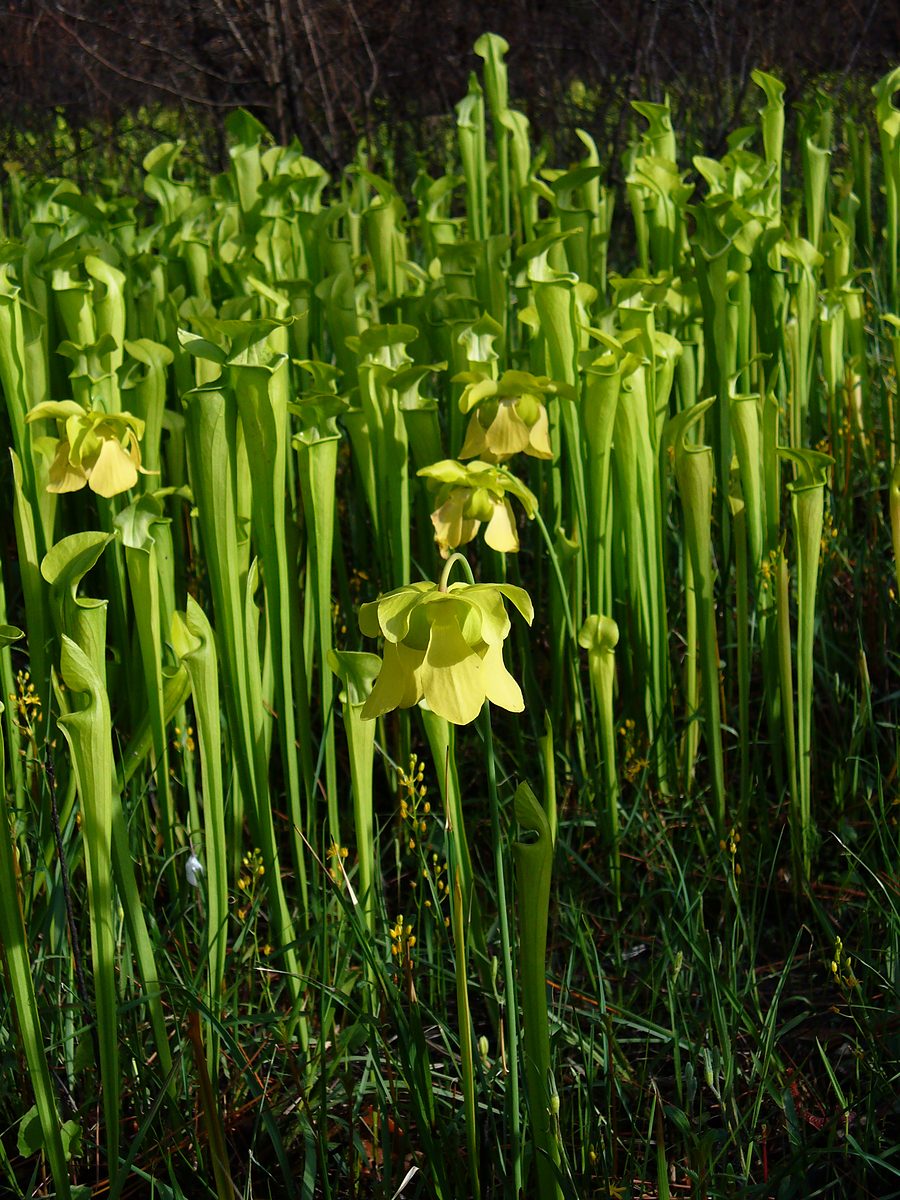
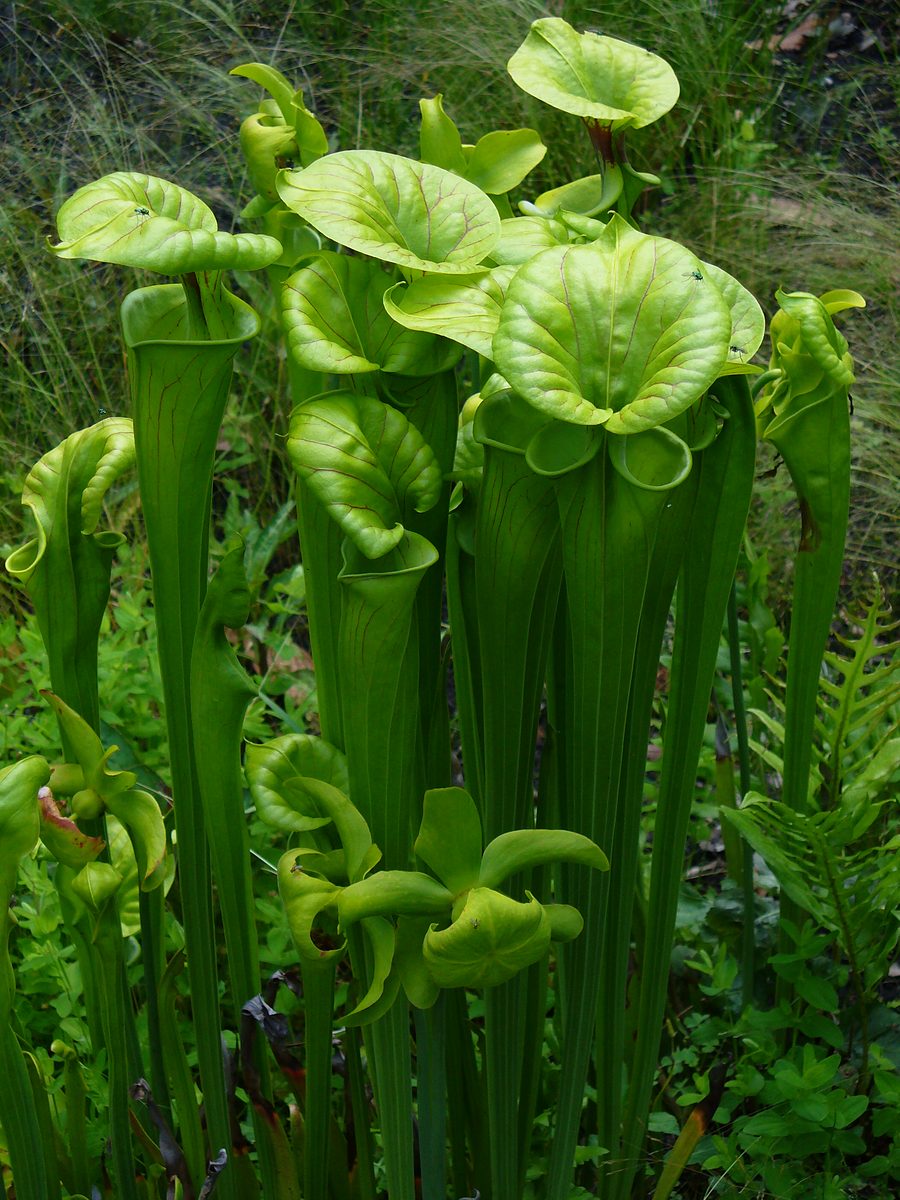
Photos: Jeff McMillian.